Acer palmatum 'Mikawa yatsubusa' Dwarf Japanese Maple
from $49.00
Acer palmatum 'Mikawa Yatsubusa' is the Most Interested Dwarf Japanese Maple in Existence
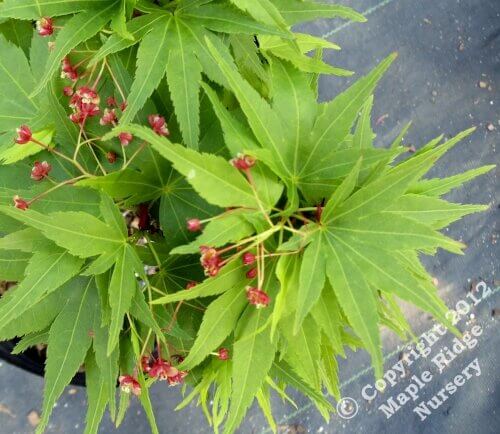
Acer palmatum 'Mikawa yatsubusa' is one of the most cool and unique dwarf Japanese maple varieties in existence. 'Mikawa yatsubusa' is slow growing with closely arranged leaves that create a wonderful stubby upright tree. The defining characteristic of 'Mikawa yatsubusa' is the short inter nodal lengths and closely growing buds that create a stacked shingle like appearance of the leaves.
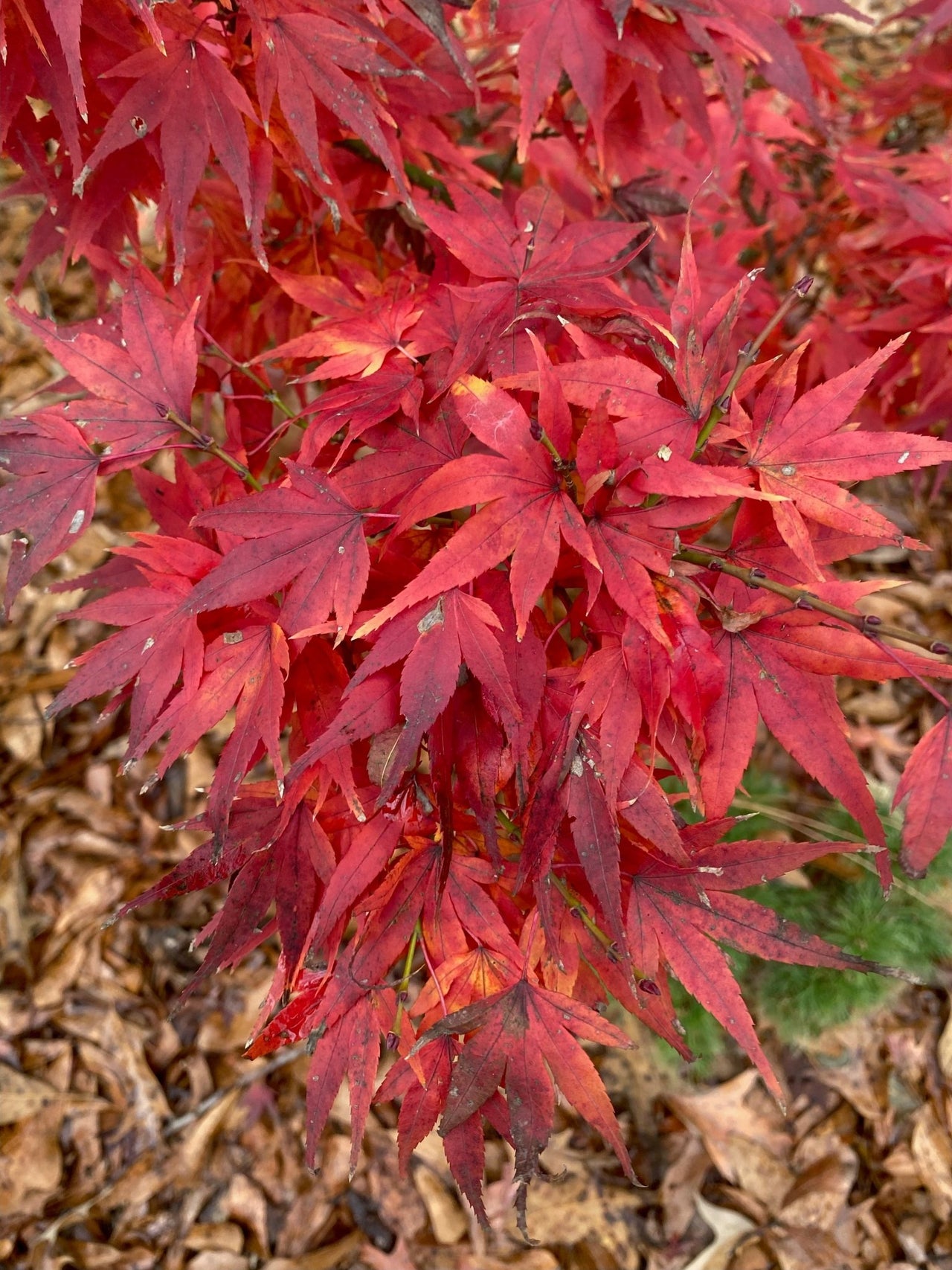
'Mikawa yatsubusa' has broad leaves that lay flat and close together. The leaf color of this interested dwarf Japanese maple tree is bright green in the spring. The green color darkens in the summer and in the shade. 'Mikawa yatsubusa' has incredible fall color ranging from orange to red. 'Mikawa yatsubusa' puts on quite a show in the fall for a dwarf Japanese maple.
While it may be slow growing, 'Mikawa yatsubusa' is still a very hardy tree and can be grown in climates all over the United States. 'Mikawa yatsubusa' can be comfortably grown in zones 5 through 9. 'Mikawa yatsubusa' can be grown in full sun in most climates. In the hottest locations 'Mikawa yatsubusa' would prefer some afternoon shade at the very least. However, 'Mikawa yatsubusa' does not require much sun and can be grown in shade in pretty much all climates.
This great little plant was found in the 1970s in the Tōkai region of Japan and named after the old Mikawa province there. 'Mikawa yatsubusa' has become known as one of the most interesting Japanese maples in existence and now has a multitude of other Japanese maple varieties that have been created from its seeds.
What is the 10 Year Size of Acer palmatum 'Mikawa Yatsubusa'?
Height: 4-6 feet Width: 3-4 feet
What is the Spring Color of Acer palmatum 'Mikawa Yatsubusa'?
Light Green
What is the Summer Color of Acer palmatum 'Mikawa Yatsubusa'?
Green
What is the Fall Color of Acer palmatum 'Mikawa Yatsubusa'?
Orange to Red
What is the Leaf Shape of Acer palmatum 'Mikawa Yatsubusa'?
Broad Flat Leaf
What is the Sun Tolerance of Acer palmatum 'Mikawa Yatsubusa'?
Partial Sun
What Growing Zones are suitable for Acer palmatum 'Mikawa Yatsubusa'?
Zones 5-9
What is the Shape of Acer palmatum 'Mikawa Yatsubusa'?
Upright and Compact Japanese Maple
What is the Growth Rate of Acer palmatum 'Mikawa Yatsubusa'?
Slow Growing Dwarf Japanese Maple
How should Acer palmatum 'Mikawa Yatsubusa' be planted?
Elevated in Well Drained Soil
Acer palmatum 'Shishio hime' Dwarf Japanese Maple
from $39.00
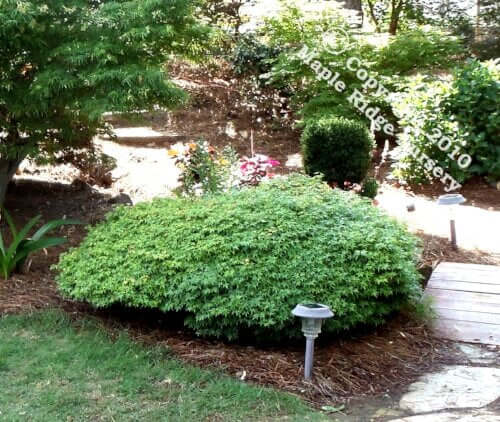
Acer palmatum ‘Shishio hime’ is a very nice, small Japanese maple that will grow much wider than tall, forming a low mound with age. 'Shishio hime' emerges in spring with Red tips to the leaves before turning green for the summer. The leaves become smaller each year as the plant matures. Older specimens have some of the smallest leaves of any Acer palmatum. The foliage is also extremely dense. Fall color ranges from red and yellow to orange.10 year size: Height: 1-3 Feet Width: 4-6 Feet
Acer palmatum 'Otome zakura' Corallinum Japanese Maple
from $39.00
Acer palmatum ‘Otome zakura’ is a member of the Corallinum group of Japanese maples and is one of our favorites. All of these Corallinum type Japanese maples leaf out very early in the spring, and when they do, ‘Otome zakura’ has some of the brightest red foliage you can imagine. This incredible red color typically holds through April. The colors then transition to orange and then eventually green by the end of May. Much like other Corallinum type Japanese maples and maybe more than the others, ‘Otome zakura’ will usually push new growth in the summer which resembles the bright red foliage of spring. This red new growth on top of the olive green foliage is extremely attractive. Fall color is then orange to red. ‘Otome zakura’ also grows with a very attractive, open form. 10 Year Size: Height: 8-10 feet Width: 4-6 feet
Juniperus chinensis 'Shimpaku'
from $29.00
$35.00
Juniperus chinensis ‘Shimpaku’, commonly known as Shimpaku Juniper, is one of the most respected and widely grown Chinese junipers in cultivation. Valued for its refined foliage, rugged character, and long-term durability, Shimpaku is equally suited for bonsai training and landscape use, making it one of the most versatile evergreen conifers available.
At Maple Ridge Nursery, Shimpaku is grown for strong root systems, balanced branching, and reliable performance across a wide range of climates.
Growth Habit & Mature Size
Shimpaku Juniper is a slow to moderate growing evergreen with a naturally irregular, layered habit. When planted in the landscape, it typically matures to 4 to 6 feet tall and wide, though size and form can be easily managed through pruning.
Its flexible branching structure allows it to be shaped, trained, or maintained naturally, making it suitable for both formal garden designs and informal plantings.
Foliage Characteristics
Shimpaku features fine, scale-like foliage with a dense, compact texture and deep green color that holds year-round. Unlike many other junipers, established plants produce very little sharp juvenile growth, resulting in a softer appearance that is ideal for close viewing and detailed shaping.
Bark & Seasonal Interest
As it matures, Shimpaku develops naturally exfoliating bark, revealing layered tones of gray, tan, and reddish brown. This peeling bark adds age and character over time, enhancing its value as a specimen plant and contributing to its reputation as a premier bonsai variety.
Sun, Soil & Water Requirements
Sun Tolerance: Partial Sun
Soil: Well-drained soil is essential
Water: Moderate water; drought tolerant once established
Shimpaku Juniper performs best in partial sun and in soils that drain freely. Shimpaku should never be planted in areas where water remains standing for extended periods.
Cold Hardiness & Reliability
Shimpaku is cold hardy to USDA Zone 5 and highly tolerant of heat, wind, and dry conditions. Once established, it is a low-maintenance evergreen with strong resistance to common juniper pests and diseases when grown in proper conditions.
Landscape & Bonsai Uses
Shimpaku is commonly used as premier bonsai material. It can be used as an accent plant in Japanese inspired gardens. Shimpaku is a good option for rock gardens, slopes, and raised beds. Shimpaku is a specimen evergreen great for year-round interest.
Why Choose Shimpaku Juniper from Maple Ridge Nursery?
Shimpaku Juniper offers a rare combination of refined appearance, toughness, and adaptability. Whether grown as a bonsai or planted in the landscape, it develops character with age and remains visually strong in every season.
Our trees are carefully selected and grown to ensure healthy roots, true cultivar identity, and reliable establishment—so they arrive ready to thrive.